


About
The Orchid Ensemble blends ancient musical instruments and traditions from China and beyond, creating a beautiful new sound that is both creative and distinct. The ensemble has embraced a variety of musical styles to its repertoire, ranging from the traditional and contemporary music of China, World Music, New Music to ...
World Music/Traditional | World Music/Contemporary | Jazz
Links
Contact
Free Verse: Words Weave Other Worlds for Orchid Ensemble at Lyon College Oct. 27th
Orchid Ensemble will then speak at the Lyon College Convocation:
Friday, October 28th at 7:00 pm in Nucor Auditorium in the Lyon Building at Lyon College.
Taiwanese/Canadian Intercultural Chamber Trio Tours Ontario, Quebec, Arkansas, and Texas Debut
Words can create a new, uncanny world. They can tie down the meaning of a musical piece—or inspire and liberate its performers. Poetry and words underpin the Juno-nominated Orchid Ensemble’s live repertoire, recordings, and interdisciplinary productions. Its latest release, Life Death Tears Dream, winner in the 2012 International Independent Music Awards, conjures otherworldly landscapes, wandering spirits, and ethereal loves. All while integrating traditions rarely considered compatible.
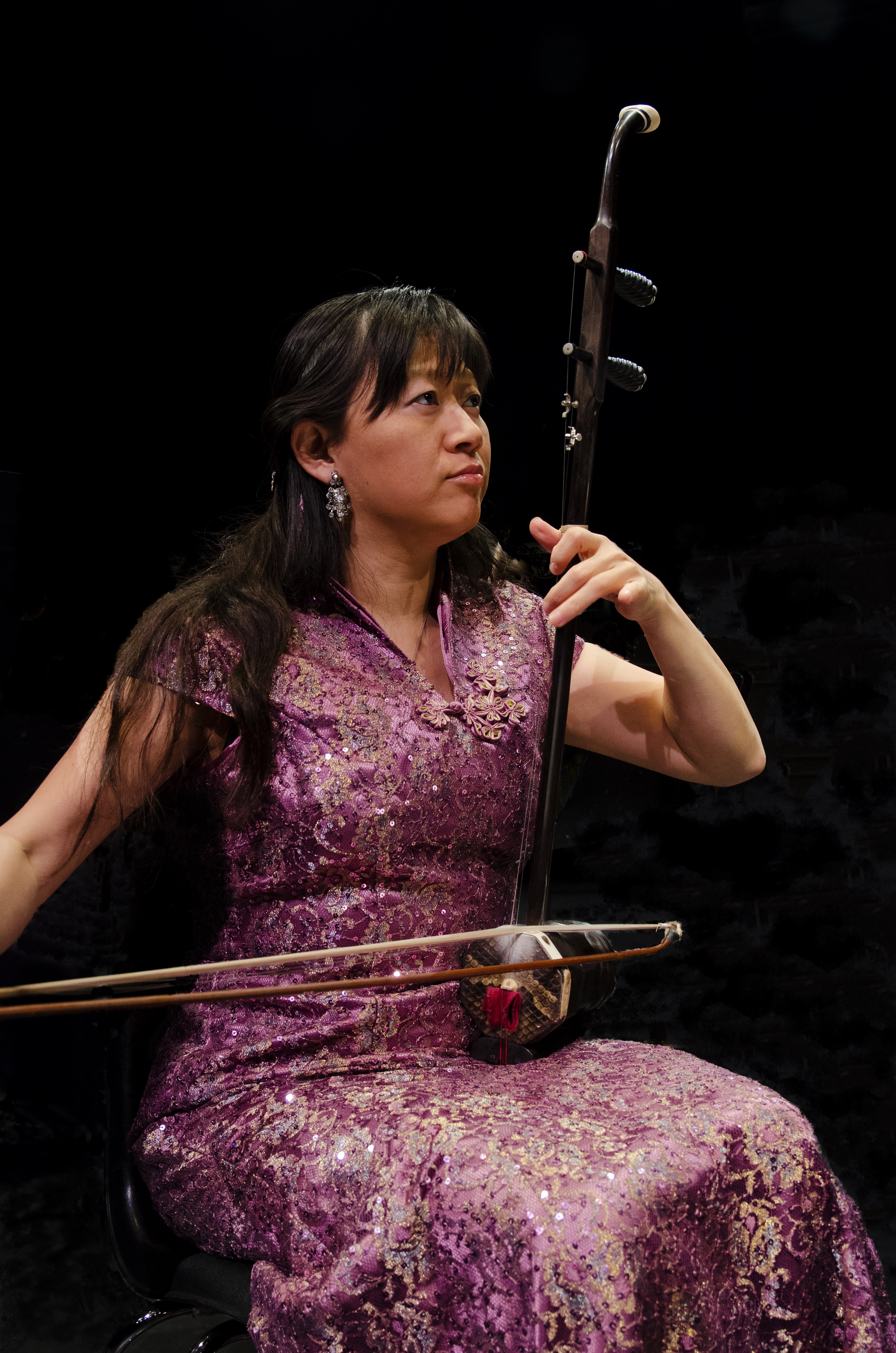
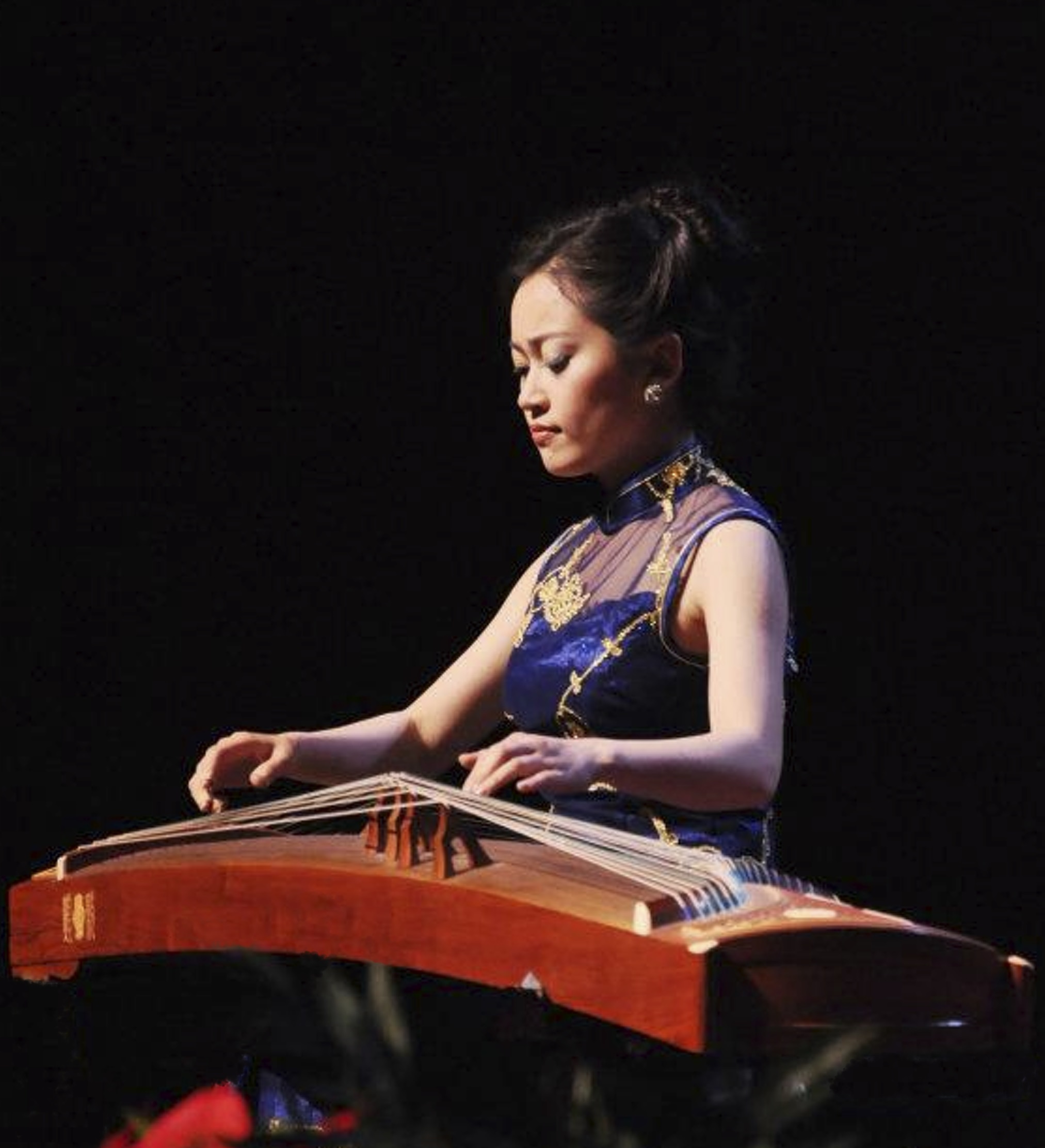
In this new world, erhu (two-stringed fiddle) echoes a flamenco lament (“Ay la llamo”). Stark electronics and earthy marimba (“Ghostly Moon”), full choir andzheng (zither with moveable bridges, “Life Death Tears Dream”) unite the spiritual and sensual, the terrifying and wonderful, drawing on Hebrew, Spanish, British, and Chinese texts, citing poets from China’s 8th-century wordsmith Li Bai to the Romantic Dante Rossetti.
“Many of the pieces we wanted to include on the album included or were inspired by poetry, but stylistically were wildly diverse,” explains Orchid’s marimba player Jonathan Bernard. “As the process evolved, we felt liberated from a musically-defined theme and found cohesion through the world of poetics, which we feel allows for realms beyond rational or logic, beyond earthly constraints.”
Compositions like “Life Death Tears Dream,” based on a contemplative poem by a contemporary Taiwanese poet, showcase how the musical and poetic mirror each other, and form the leaping off point for Orchid Ensemble’s ten year old Choir Collaboration Project.
Included in its Texas debut performances, the tour includes a collaboration with the Eastfield College Choir in Dallas, Texas. Orchid Ensemble’s choir collaboration project was originally conceived in 2006. It features a collection of original Canadian compositions and arranged traditional music for Orchid’s instrumentation and voices, allowing choir members to actively experience and internalize Asian languages, styles, and techniques. Choirs are centers of musical sharing in communities, representing strong towards a deeper understanding of the music and its cultural context.
The Eastfield College residency (Oct 24-26) will also include collaboration with the college’s Dance Department. No strangers to interdisciplinary activity, the Orchid Ensemble has been producing large-scale performances with dance, visual, and media artists since 2006, working with media artists Aleksandra Dulic and Kenneth Newby, Chinese contemporary dancers Chengxin Wei and Jessica Jone, calligrapher and painter Yukman Lai, Dervish dancer Raqib Brian Burke, Mozaico Flamenco Dance Theatre, Indonesian dancer/musician Sutrisno Hartana, Tomoe Arts Society, and Aeriosa Dance.
Life Death Tears Dream met great success over the airwaves, charting on Earshot's top 10 'International' lists in, as well as making the top 10 lists for radio stations in Toronto, Guelph, Lethbridge, Calgary, and Edmonton. The ensemble also recently won the 12th Annual Independent Music Awards in the “Eclectic Song” Category , as well as picking up a nomination in the "World Traditional Album" category. The CD has also picked up reviews in many print publications, including Songlines, Georgia Straight, Exclaim, and Penguin Eggs.
Music presented on tour will also draw from the Orchid Ensemble’s Juno nominated CD Road to Kashgar (2004), and Debut CD Heartland (2000).
The dusty Silk Road city of Kashgar in Western China and the bustling metropolis of Vancouver have more in common than it may seem: They are both cultural crossroads on tried-and-true trade routes and sonic crucibles cooking up intercultural sounds. Harnessing these possibilities is the Vancouver-based Orchid Ensemble, a trio of Chinese, Taiwanese, and Canadian musicians turning the traditions of the Pacific Rim into elegant, intercultural chamber music by challenging the ancient instruments and classical canons of both East and West. Road to Kashgar expresses its inspiration from the Silk Road through both new works and arrangements of ancient Persian, Chinese Jewish, Uighur, and Bengali traditions.
For the Orchid Ensemble, integrating traditions from Kashgar, the Indian Subcontinent, or even Eastern Europe means more than just staging a multicultural free-for-all; it’s about the subtle discovery of what makes up a music’s inner vocabulary. This spirit has spurred the Orchid Ensemble to commission new works from Asian-inspired contemporary Canadian composers. Artists like Mark Armanini, with 30 years of deeply exploring Japanese, Chinese, and Vietnamese Instruments, or Moshe Denburg, an Orthodox Jewish musician who immersed himself in Indian music, and whose exacting pieces for the Orchid Ensemble investigate both striking images from a far Western Chinese desert (“The Endless Sands of the Taklimakan”) and new approaches to the group’s instruments.
Orchid Ensemble, named in 2014 by DuBMC as one of ‘10 DIY Musicians Whose Careers Global Music Artists Should Follow’, has quietly created new possibilities, both for traditional Chinese instruments and for small chamber-style groups. Lan Tung, the ensemble’s founder, virtuosic erhu player, and respected composer, found a different approach to her instrument, for which there was no small ensemble repertoire in the Chinese classical tradition. Bernard later joined the group and brought a rich palette of percussive timbres and the only chordal instrument to the ensemble.
Along with discovering, composing, and commissioning new repertoire, the group faced other musical challenges. Bernard, for instance, had to learn to navigate fascinating differences in intonation between his marimba and his two fellow members’ Chinese instruments, to avoid unwanted clashes.
Their mutual, adventuresome exploration yielded a richness and unexpected combination of timbres and techniques well suited to a wide range of pieces, from the contemporary to the age-old, from East, West, and everywhere else. While the ensemble shines on classical Chinese works like “Three Variations on Plum Blossom,” guided by a 4th-century melody, they open striking new territory with contemporary composer Barry Truax’s “Ghostly Moon,” an eerie dialogue between male and female voices, as well as electronic and acoustic elements.
In the repertoire featured on Life Death Tears Dream, as with the ensemble’s ongoing collaborative projects to bring more Asian-language repertoire into the choral canon, texts inform and infuse the sound. “In China, as in most other places, poetry wasn’t just on paper. It was recited,” notes Tung, whose improvised, tradition-based recitation of a Li Bai poem can be heard on “Dancing Moon.” “The tonal quality of many Asian languages has affected the music. You hear a lot more bent notes, perhaps echoing the rise and fall of the tones.”
The diversity of approaches, materials, and ideas belies the aesthetic unity of the ensemble’s work, its insistence on a common, deeply felt thread tying together the seemingly disparate. “When we present listeners or collaborators with a piece of music, we assume that they want to know where the music is coming from, and are intrigued by the cultural context,” Bernard says. “The music itself is simultaneously a beginning and an end point. We always invite people to go deeper.”
Taiwanese/Canadian Intercultural Chamber Trio Tours Ontario, Quebec, Arkansas, and Texas Debut
Words can create a new, uncanny world. They can tie down the meaning of a musical piece—or inspire and liberate its performers. Poetry and words underpin the Juno-nominated Orchid Ensemble’s live repertoire, recordings, and interdisciplinary productions. Its latest release, Life Death Tears Dream, winner in the 2012 International Independent Music Awards, conjures otherworldly landscapes, wandering spirits, and ethereal loves. All while integrating traditions rarely considered compatible.
In this new world, erhu (two-stringed fiddle) echoes a flamenco lament (“Ay la llamo”). Stark electronics and earthy marimba (“Ghostly Moon”), full choir andzheng (zither with moveable bridges, “Life Death Tears Dream”) unite the spiritual and sensual, the terrifying and wonderful, drawing on Hebrew, Spanish, British, and Chinese texts, citing poets from China’s 8th-century wordsmith Li Bai to the Romantic Dante Rossetti.
“Many of the pieces we wanted to include on the album included or were inspired by poetry, but stylistically were wildly diverse,” explains Orchid’s marimba player Jonathan Bernard. “As the process evolved, we felt liberated from a musically-defined theme and found cohesion through the world of poetics, which we feel allows for realms beyond rational or logic, beyond earthly constraints.”
Compositions like “Life Death Tears Dream,” based on a contemplative poem by a contemporary Taiwanese poet, showcase how the musical and poetic mirror each other, and form the leaping off point for Orchid Ensemble’s ten year old Choir Collaboration Project.
Included in its Texas debut performances, the tour includes a collaboration with the Eastfield College Choir in Dallas, Texas. Orchid Ensemble’s choir collaboration project was originally conceived in 2006. It features a collection of original Canadian compositions and arranged traditional music for Orchid’s instrumentation and voices, allowing choir members to actively experience and internalize Asian languages, styles, and techniques. Choirs are centers of musical sharing in communities, representing strong towards a deeper understanding of the music and its cultural context.
The Eastfield College residency (Oct 24-26) will also include collaboration with the college’s Dance Department. No strangers to interdisciplinary activity, the Orchid Ensemble has been producing large-scale performances with dance, visual, and media artists since 2006, working with media artists Aleksandra Dulic and Kenneth Newby, Chinese contemporary dancers Chengxin Wei and Jessica Jone, calligrapher and painter Yukman Lai, Dervish dancer Raqib Brian Burke, Mozaico Flamenco Dance Theatre, Indonesian dancer/musician Sutrisno Hartana, Tomoe Arts Society, and Aeriosa Dance.
Life Death Tears Dream met great success over the airwaves, charting on Earshot's top 10 'International' lists in, as well as making the top 10 lists for radio stations in Toronto, Guelph, Lethbridge, Calgary, and Edmonton. The ensemble also recently won the 12th Annual Independent Music Awards in the “Eclectic Song” Category , as well as picking up a nomination in the "World Traditional Album" category. The CD has also picked up reviews in many print publications, including Songlines, Georgia Straight, Exclaim, and Penguin Eggs.
Music presented on tour will also draw from the Orchid Ensemble’s Juno nominated CD Road to Kashgar (2004), and Debut CD Heartland (2000).
The dusty Silk Road city of Kashgar in Western China and the bustling metropolis of Vancouver have more in common than it may seem: They are both cultural crossroads on tried-and-true trade routes and sonic crucibles cooking up intercultural sounds. Harnessing these possibilities is the Vancouver-based Orchid Ensemble, a trio of Chinese, Taiwanese, and Canadian musicians turning the traditions of the Pacific Rim into elegant, intercultural chamber music by challenging the ancient instruments and classical canons of both East and West. Road to Kashgar expresses its inspiration from the Silk Road through both new works and arrangements of ancient Persian, Chinese Jewish, Uighur, and Bengali traditions.
For the Orchid Ensemble, integrating traditions from Kashgar, the Indian Subcontinent, or even Eastern Europe means more than just staging a multicultural free-for-all; it’s about the subtle discovery of what makes up a music’s inner vocabulary. This spirit has spurred the Orchid Ensemble to commission new works from Asian-inspired contemporary Canadian composers. Artists like Mark Armanini, with 30 years of deeply exploring Japanese, Chinese, and Vietnamese Instruments, or Moshe Denburg, an Orthodox Jewish musician who immersed himself in Indian music, and whose exacting pieces for the Orchid Ensemble investigate both striking images from a far Western Chinese desert (“The Endless Sands of the Taklimakan”) and new approaches to the group’s instruments.
Orchid Ensemble, named in 2014 by DuBMC as one of ‘10 DIY Musicians Whose Careers Global Music Artists Should Follow’, has quietly created new possibilities, both for traditional Chinese instruments and for small chamber-style groups. Lan Tung, the ensemble’s founder, virtuosic erhu player, and respected composer, found a different approach to her instrument, for which there was no small ensemble repertoire in the Chinese classical tradition. Bernard later joined the group and brought a rich palette of percussive timbres and the only chordal instrument to the ensemble.
Along with discovering, composing, and commissioning new repertoire, the group faced other musical challenges. Bernard, for instance, had to learn to navigate fascinating differences in intonation between his marimba and his two fellow members’ Chinese instruments, to avoid unwanted clashes.
Their mutual, adventuresome exploration yielded a richness and unexpected combination of timbres and techniques well suited to a wide range of pieces, from the contemporary to the age-old, from East, West, and everywhere else. While the ensemble shines on classical Chinese works like “Three Variations on Plum Blossom,” guided by a 4th-century melody, they open striking new territory with contemporary composer Barry Truax’s “Ghostly Moon,” an eerie dialogue between male and female voices, as well as electronic and acoustic elements.
In the repertoire featured on Life Death Tears Dream, as with the ensemble’s ongoing collaborative projects to bring more Asian-language repertoire into the choral canon, texts inform and infuse the sound. “In China, as in most other places, poetry wasn’t just on paper. It was recited,” notes Tung, whose improvised, tradition-based recitation of a Li Bai poem can be heard on “Dancing Moon.” “The tonal quality of many Asian languages has affected the music. You hear a lot more bent notes, perhaps echoing the rise and fall of the tones.”
The diversity of approaches, materials, and ideas belies the aesthetic unity of the ensemble’s work, its insistence on a common, deeply felt thread tying together the seemingly disparate. “When we present listeners or collaborators with a piece of music, we assume that they want to know where the music is coming from, and are intrigued by the cultural context,” Bernard says. “The music itself is simultaneously a beginning and an end point. We always invite people to go deeper.”
Dispatch Details
Venue Link:
Venue City, State:
Batesville, AR
Venue St. Address:
2300 Highland Rd
Venue:
Lyon College - Bevens Music Room
Concert Start Time:
7:30 PM